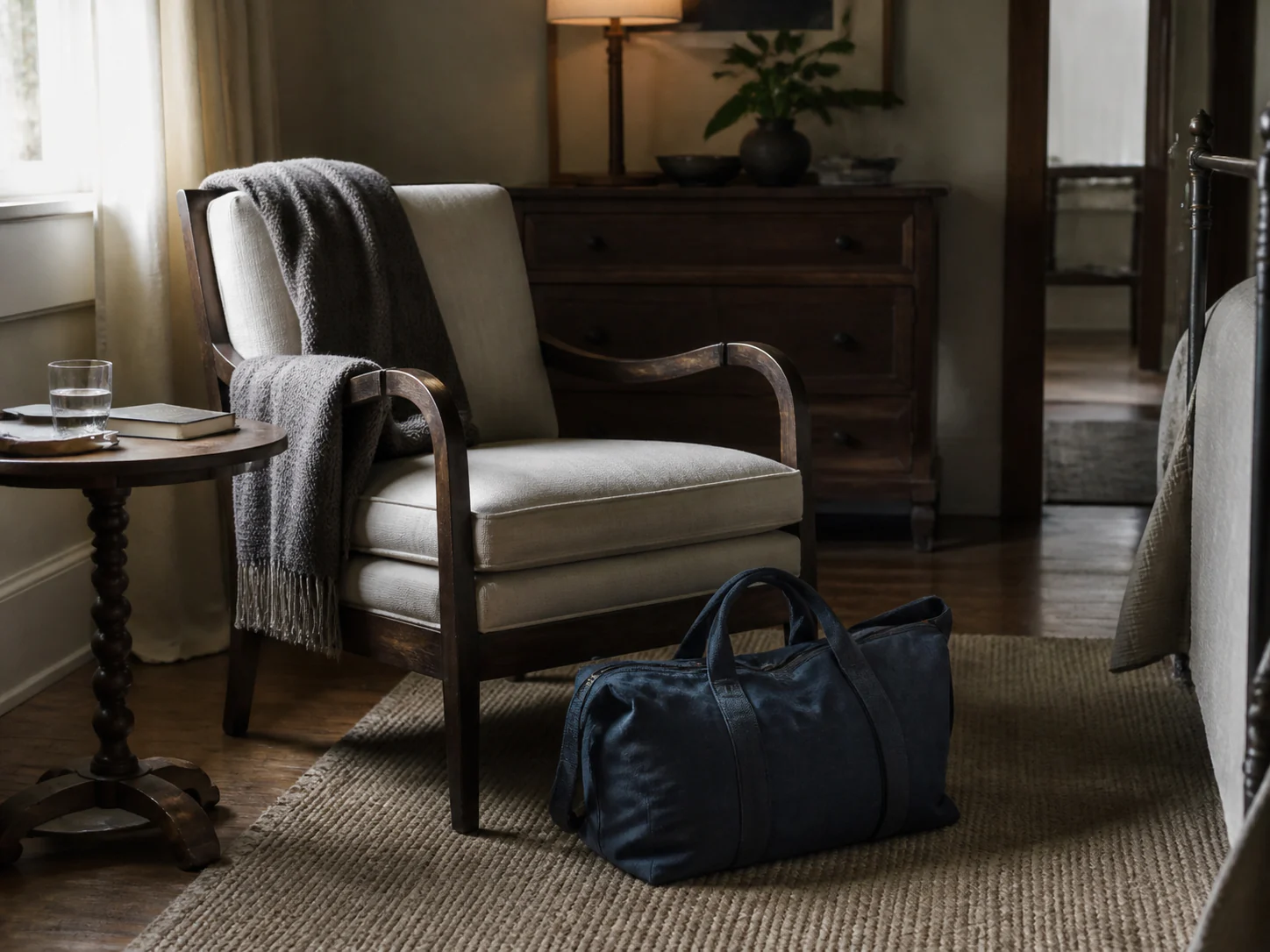
Hospitality is an unusual gift because it creates work at the same moment it creates pleasure.
Someone cleans a room, changes sheets, buys food, rearranges plans, thinks about breakfast, finds the spare key, remembers that you take milk in your coffee and wonders whether the house is warm enough at night.
The guest's job is not to repay all of that.
If repayment were required, it would no longer be hospitality.
The guest's job is to receive it well.
That sounds simple. In practice, it requires one of the most useful social skills: being attentive enough to another person's home that your presence adds more pleasure than strain.
Arrive as expected
Good guest behaviour begins before the door opens.
Reply to the invitation. Agree on dates. Do not turn “come for the weekend” into an open-ended residency. If travel plans change, say so before the host has spent an hour wondering whether dinner should wait.
Modern houseguest guidance tends to emphasize the practical details for good reason: bring the personal items you know you need, keep track of your belongings, and communicate arrival and departure plans clearly.1
These are modest acts of consideration because they remove unnecessary work.
The same principle applies to requests.
It is poor manners to arrive with a significant need that could reasonably have been mentioned beforehand and expect the household to reorganize itself instantly.
But the opposite rule—a guest must never ask for anything—is not sensible either.
If you have a genuine dietary restriction, mobility need, allergy or other practical requirement, say so early and without drama. Where possible, offer a solution.
“I can't eat dairy, but please don't change the whole meal for me—I can bring something that works.”
That gives the host information without handing them a problem.
Hospitality is generous. It is not clairvoyant.
Let the host host
One of the awkward habits of conscientious guests is trying so hard not to impose that they become difficult to care for.
Every offer is refused.
Every preference is hidden.
“Anything is fine.”
“No, really, I don't need breakfast.”
“Please don't go to any trouble.”
Eventually the host has to negotiate for the privilege of giving the hospitality they already chose to offer.
Receiving well is a form of participation.
If someone has made coffee, have coffee if you want it. If they planned a walk, join with good spirit unless there is a reason not to. If dinner goes wrong, do not make the host perform embarrassment on top of cooking.
A guest should reduce anxiety, not manufacture it.
This is why enthusiasm matters more than constant praise.
You do not need to compliment every cushion in the room.
Simply make it clear that you are glad to be there.
Emily Post's contemporary houseguest advice includes adaptability, willingness to participate and showing that you are enjoying yourself.2 Those points are less about etiquette rules than emotional labour. A host should not have to spend the visit wondering whether the guest is bored, offended or secretly miserable.
Help, but do not take over
“Can I help?” is usually a welcome sentence.
The answer may be yes.
It may also be no.
If your host gives you a job, do it. Clear plates, carry glasses, chop vegetables, walk the dog, pick up groceries.
If the answer is “No, you're fine—go sit down,” believe them.
Insisting can turn assistance into another form of control.
The distinction is simple:
Help the household do what it is trying to do.
Do not make the household do things your way.
Emily Post's guidance makes the same point in practical terms: offer help, especially around the kitchen, but do not insist when the host declines.3
A good guest contributes without needing to be in charge.
Read the house
Every household has a rhythm.
Shoes may come off at the door.
Breakfast may be silent until coffee.
Children may go to bed at eight.
The dog may not be allowed on the sofa despite the compelling case the dog makes otherwise.
Someone may wake early for work while everyone else sleeps.
None of these customs need to become your customs at home.
While you are a guest, they deserve attention.
That does not mean surrendering all independence. It means recognizing that hospitality takes place inside somebody else's ordinary life.
The easiest guests notice before they need to be told.
They keep shared spaces reasonably neat. They do not monopolize the bathroom. They ask before inviting another person over. They do not disappear for half a day without saying whether they will be home for dinner. They avoid turning the host's possessions into experiments.
In other words, they remember that “make yourself at home” is an expression of welcome, not a transfer of title.
Be easy about imperfection
Hospitality exposes the host.
The meal can fail in public. The guest room can be too warm. A child can have a tantrum. The dog can steal something. The carefully planned afternoon can be ruined by rain.
A good guest protects the host from unnecessary self-consciousness.
That does not require pretending a burnt dinner is a culinary triumph.
It requires proportion.
Eat what can be eaten. Laugh when laughter helps. Accept the takeaway that replaces the collapsed soufflé. Do not turn minor inconvenience into a story the host has to hear you tell three times before you leave.
There is great grace in allowing another person to host you imperfectly.
It says that the relationship mattered more than the performance.
Know when a gift helps
A host gift is a useful custom because it gives gratitude a physical form.
It is not an entrance fee.
For an overnight stay, a small gift, taking the host out, contributing to groceries during a longer visit, or sending something afterward can all be appropriate. Emily Post recommends some form of host gift or reciprocal gesture for houseguests while also making clear that it should remain within the guest's means.4
The scale should match the situation.
A weekend with close friends does not need to become a ceremonial exchange of luxury goods.
The best gesture often has the same quality as the best thank-you note: it shows that you were paying attention.
Leave the house lighter
Departure is part of the visit.
Gather your things. Check the bathroom. Deal with obvious mess. Ask what your host would like you to do with towels or sheets rather than stripping the bed automatically in a household that handles laundry differently.
Say thank you when you leave.
Then, after a substantial stay, say it again.
The handwritten post-visit note survives because hospitality is one of those kindnesses that often deserves a second act of gratitude. Emily Post's houseguest guidance continues to recommend it.1
But the note is not what makes the guest good.
The note merely closes the pattern.
A good guest arrives with consideration, receives with warmth, participates without taking over, notices the shape of the household and leaves the host with less work than carelessness would have created.
The highest compliment is not that you followed every rule.
It is that, sometime later, the invitation comes again.